
工厂方法模式
Table of Contents
工厂方法模式是一种创建型设计模式,在父类中提供一个创建对象方法,允许子类 决定实例化对象的类型
动态分派
- 动态分派和运行时有关,也就是
运行时多态,比如java中的方法重写具体创建类型由子类在运行时决定 - 延迟绑定
- 扩展性强: 秩序添加新的子类工厂
- 解偶:依赖抽象工厂和抽象产品,与具体实现解偶
- 运行时决策:通过多态机制,实际调用的工厂方法在运行时确定
静态分派
静态分派则是在编译时确定,比如
方法重载提前绑定
class StaticFactory {
    public static Product Createor(String type) {
        if ("a".equals(type)){
            return new ProductA();
        } else {
            return new ProcutB();
        }
    }
}
高效: 类型决策在编译时完成,无需运行时动态开销
紧耦合: 新增类型需要修改工程类的分支逻辑(违反开闭原则)
编译时决策: 对象的创建逻辑由参数或者静态配置决定
区别和适用场景
| 维度 | 动态分派 | 静态分派 |
|---|---|---|
| — | — | — |
| 决策时机 | 运行时(动态多态) | 编译时(静态多态) |
| 扩展性 | 高(子类扩展) | 低(工厂类) |
| 耦合度 | 低(依赖抽象) | 高(根据具体类型策略) |
| 典型模式 | 工厂方法模式 | 简单工厂模式 |
| 场景 | 灵活扩展,多态创建对象 | 类型固定,无需频繁扩展的简单场景 |
设计取舍
选择动态分派:当系统需要支持未来扩展,且希望避免修改现有代码时。
选择静态分派:当对象类型固定且无需动态扩展,或对性能有严格要求时。
动态分派和静态分派在工厂方法模式中代表了两种不同的设计哲学:动态分派通过多态实现运行时灵活性,是工厂方法模式的核心机制;静态分派通过编译时逻辑实现简单决策,通常用于轻量级场景。理解二者的区别有助于在设计中权衡扩展性、耦合度和性能。
RUST 实现
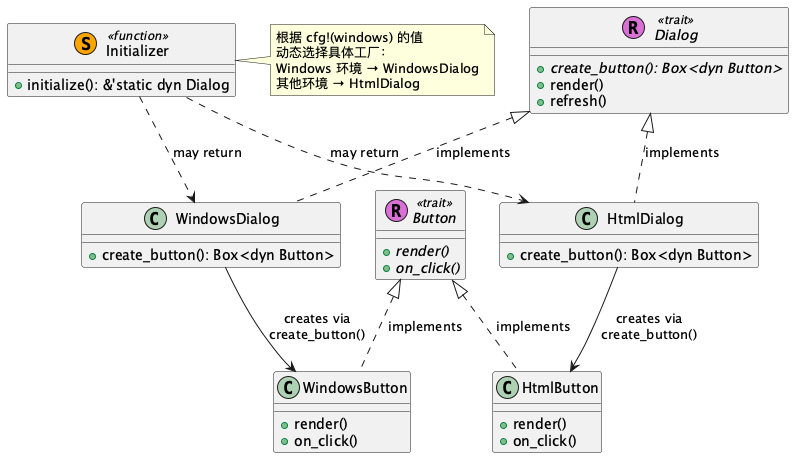
代码实现
pub trait Button {
    fn render(&self);
    fn on_click(&self);
}

/// Dialog has a factory method
/// creates different buttons deppending on a factory implementation
pub trait Dialog {
    /// factory method to create button.
    fn create_button(&self) -> Box<dyn Button>;

    fn render(&self) {
        let button = self.create_button();
        button.render();
    }

    fn refresh(&self) {
        println!("Dialog: refresh");
    }
}

pub struct HtmlButton;

impl Button for HtmlButton {
    fn render(&self) {
        println!("HtmlButton: render");
        self.on_click();
    }

    fn on_click(&self) {
        println!("HtmlButton: on_click");
    }
}

pub struct HtmlDialog;
impl Dialog for HtmlDialog {
    fn create_button(&self) -> Box<dyn Button> {
        Box::new(HtmlButton)
    }
}

pub struct WindowsButton;
impl Button for WindowsButton {
    fn render(&self) {
        println!("WindowsButton: render");
        self.on_click();
    }

    fn on_click(&self) {
        println!("WindowsButton: on_click");
    }
}

pub struct WindowsDialog;
impl Dialog for WindowsDialog {
    fn create_button(&self) -> Box<dyn Button> {
        Box::new(WindowsButton)
    }
}

fn initialize() -> &'static dyn Dialog {
    let os = cfg!(windows);
    if os {
        println!("WindowsDialog initialized");
        return &WindowsDialog;
    } else {
        println!("HtmlDialog initialized");
        return &HtmlDialog;
    }
}

fn main() {
    let dialog = initialize();
    dialog.render();
    dialog.refresh();
}
静态分派
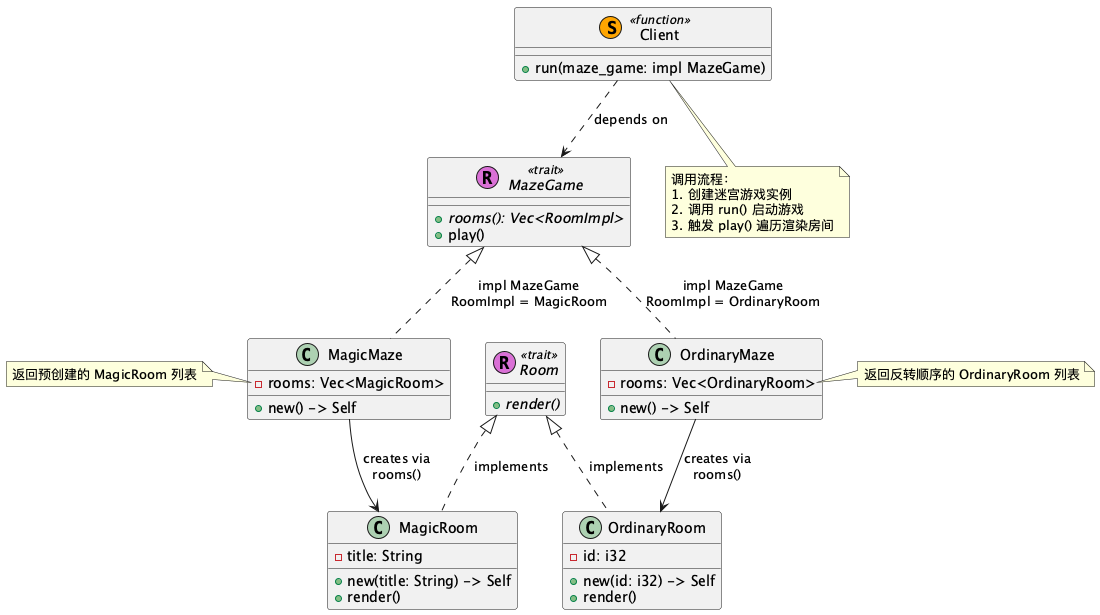
/// static factory method
///

pub trait Room {
    fn render(&self);
}

/// Maze game has a factory method producing different rooms
pub trait MazeGame {
    type RoomImpl: Room;
    /// factory method to create room.
    fn rooms(&self) -> Vec<Self::RoomImpl>;

    fn play(&self) {
        for room in self.rooms() {
            room.render();
        }
    }
}

/// the client code initializes resoureces an does other preparations
/// then it uses a factory to construst and run the game
pub fn run(maze_game: impl MazeGame) {
    println!("Game is running");
    maze_game.play();
}

//--------------------------------------------------------------------------
//--------------------------------------------------------------------------
#[derive(Debug, Clone)]
pub struct MagicRoom {
    title: String,
}

impl MagicRoom {
    pub fn new(title: String) -> Self {
        Self { title }
    }
}

impl Room for MagicRoom {
    fn render(&self) {
        println!("MagicRoom {}: render", self.title);
    }
}

pub struct MagicMaze {
    rooms: Vec<MagicRoom>,
}

impl MagicMaze {
    pub fn new() -> Self {
        Self {
            rooms: vec![
                MagicRoom::new("room1".to_string()),
                MagicRoom::new("room2".to_string()),
                MagicRoom::new("room3".to_string()),
            ],
        }
    }
}

impl MazeGame for MagicMaze {
    type RoomImpl = MagicRoom;

    fn rooms(&self) -> Vec<Self::RoomImpl> {
        self.rooms.clone()
    }
}

//--------------------------------------------------------------------------
//--------------------------------------------------------------------------

#[derive(Debug, Clone)]
pub struct OrdinaryRoom {
    id: i32,
}

impl OrdinaryRoom {
    pub fn new(id: i32) -> Self {
        Self { id }
    }
}

impl Room for OrdinaryRoom {
    fn render(&self) {
        println!("OrdinaryRoom {}: render", self.id);
    }
}

pub struct OrdinaryMaze {
    rooms: Vec<OrdinaryRoom>,
}

impl OrdinaryMaze {
    pub fn new() -> Self {
        Self {
            rooms: vec![
                OrdinaryRoom::new(1),
                OrdinaryRoom::new(2),
                OrdinaryRoom::new(3),
            ],
        }
    }
}

impl MazeGame for OrdinaryMaze {
    type RoomImpl = OrdinaryRoom;

    fn rooms(&self) -> Vec<Self::RoomImpl> {
        let mut rooms = self.rooms.clone();
        rooms.reverse();
        rooms
    }
}

//--------------------------------------------------------------------------
//--------------------------------------------------------------------------
fn main() {
    let ordinary_maze = OrdinaryMaze::new();
    run(ordinary_maze);

    let magic_maze = MagicMaze::new();
    run(magic_maze);
}
